A Personal Flower Note for an Old Friend: A Short Guide
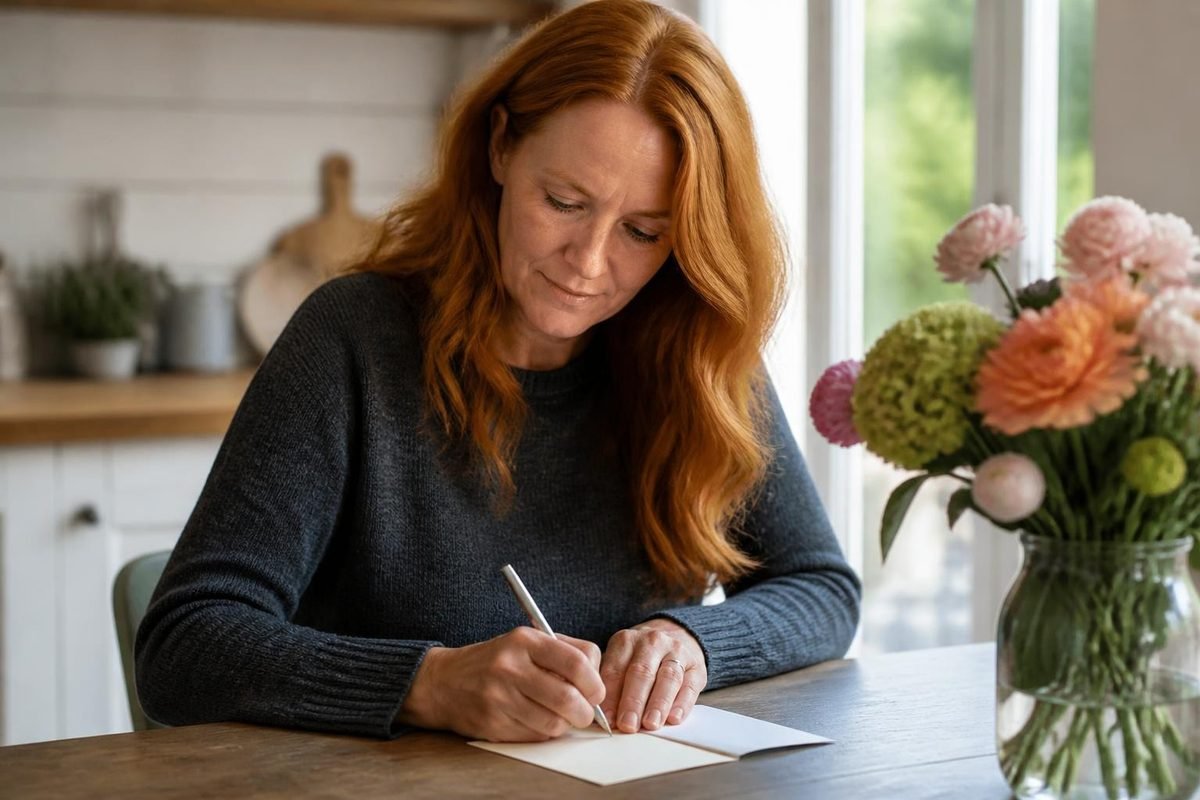
Tell your childhood friend why they are on your mind, and include a memory you share if one comes to mind. A few sincere words are enough to make flowers feel personal; the message does not need to be perfect.
Decide on your main message
Before writing, consider why you are sending the flowers. Perhaps you are marking good news, showing support during a hard time, or getting in touch after a long silence. Let that purpose guide what you say rather than trying to describe your entire friendship.
Address your friend by the name you usually use, and write in your own everyday voice. If you normally speak plainly to each other, a straightforward note will feel more genuine than a formal greeting.
Bring up a familiar moment
A particular detail can represent a long friendship in just a few lines. You might remember walking to school, playing a game, or spending time in a certain place. Pick a moment you think your friend will recall with warmth.
For instance, you could say, “The flowers reminded me of the garden where we used to play. I’m grateful we’re still friends.” Another option is, “I often think about our walks home from school. You’re on my mind today.”
Use private jokes with care, especially if another person may read the card. Leave out a memory if it could embarrass your friend or bring back a painful period.
Match the note to the occasion
For a birthday, you might write, “Happy birthday to a friend I’ve known for so long. We’ve been through a lot together, and I hope the year ahead gives you plenty of reasons to smile.”
If your friend is going through a difficult time, make the message about them: “I’m thinking of you and sending love. I’m here to talk or keep you company if that would help.” Offer only support you can truly provide.
There does not have to be a special event. A brief message could read, “I saw these flowers and thought of you. I hope we can catch up soon.” If you have not been in touch lately, you can add, “It’s been a long time, but you still cross my mind often.”
Build the card message
- Begin by explaining why you sent the flowers.
- Include a shared memory or name something you value about your friend.
- Close with a kind thought, a sincere offer of help, or an invitation to catch up.
- Read the note over to check that it sounds like you, then add your name.
Since a flower card has limited space, two or three sentences will usually do. If you want to say more, write a longer letter separately.
Common questions about flower cards
What can I say after years without contact?
Mention the time apart without suggesting your friend is at fault. Let them know you have been thinking of them and would be happy to hear from them.
Is humor a good choice?
It can be, if joking is part of your friendship and suits the situation. For a message of sympathy or support, skip jokes that might take attention away from what you mean.
What is a suitable sign-off?
Sign with your usual name or a nickname your friend knows. You can add “Love” if that is comfortable and natural between you.
Further reading: https://greensys2019.org/post-harvest-care-why-the-first-hours-decide-a-flowers-vase/